BallisticBill
Super member
I think your thinking is totally confused, I think.Part II
======
All springs used in this post are equal in every way. This is a washer | plain and simple.
Since series stack increase deflection for the same load would ()()()|||| be a better stack than ()()()()() [assuming relaxed height the same] since the piston movement would be less and therefore recovery would be quicker?????
With the ()()()|||| stack if opening time is reduced would that then mean a higher set pressure for needed for the same muzzle energy because the reg open duration is reduced and therefore air volume reduced?
I will be testing this out at some point but I want to get the currentplaytimeresearch gun back together and scoped up today for some plinking.

The recovery and air mass are largely unrelated to the valve lift and dwell over 95% of the lift. The main factors are valve cross-sectional area and how this is limited at the end of the valve stroke.
The reg setting will be unaffected by recovery rate because the total volume of air is determined by relative pressure acting on the piston and on the valve, I.e the static forces at the end of the stroke.
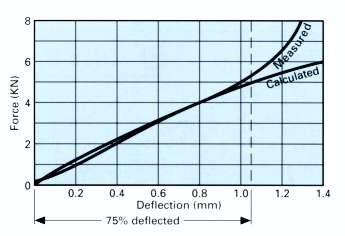
The objective is to achieve a high flow rate, not to change mass of air passed. The best way might be to redesign the valve seat. If you want to improve rate of flow by changing the stack and you can get away with reducing the number of pairs and adding spacers, you would be better off using more, thinner washers. Then the sensitivity to small pressure changes would be increased. Isn't that what you are really looking for... more deflection over the pressure change at the very end of the stroke?
The downside with using fewer or softer washers is more metal fatigue. So it's speed vs longevity, I think.

 . Stop reading now if you have low tolerance for rambling waffle. You have been warned.