

Manley JP
Member Extraordinaire
One of many interesting things at the 2025 forum meet, not knowing anything in particular about airguns and zero about PCP, was asking about PCP history, presuming it was a fairly new concept and hearing Mr Ganton Gunner himself no less, hope he would not mind me saying and some of the members talking about and having a discussion on the history of PCP air rifles used for military use centuries back. Was pretty interesting stuff to be honest. Even my Westie sat still to listen.
A great conversation to listen to and cap off a free sausage at the BBQ and getting to test the odd HW Springer or so and a Walnut HW100 PCP at the plinking station, in addition to meeting so many nice folks. I had visions of it being attached to a long air hose with a team of men pumping the bellows and being pointed over a battlement wall during military sieges but was surprised to see it was a mobile rifle, with the pump and kit in a bag. Used on trips by explorers also, in the early stages of the exploration of the AmerIcan West and demonstrated to the American Indians.
The early days of PCP. Credit though to member Mr Mark Palmer as he pointed out the PCP in the military, in a reply post to a 2022 thread, posted below- when I was looking to see if anyone had covered the subject. Mr Palmer among many others knew his onions, so top marks.
Info kind of "found" in the public domain. Worth a read. Interesting stuff, what came first, the chicken or the egg, the Spring rifle or a PCP?
Air rifles had been used since the 16th century, mainly to hunt.... They were a favorite of poachers, because the lack of noise and smoke meant they could be used covertly.

 en.wikipedia.org
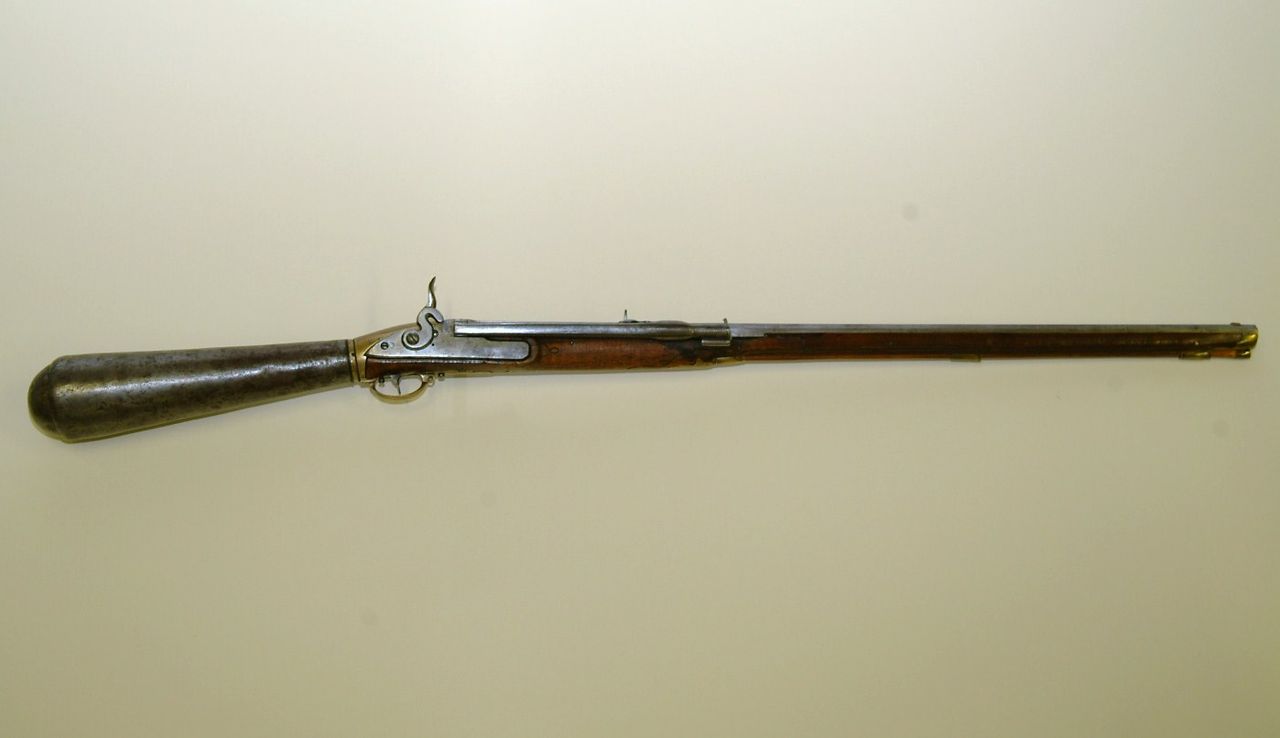
Girandoni’s extraordinary design had two innovations that made it a formidable military weapon, rather than a sporting gun for wealthy nobles. First, it was a breech-loader, with a 20-round tubular magazine fixed alongside the barrel. To load the weapon, the user simply elevated the muzzle and pressed a spring-loaded slider, which picked up a ball and snapped it into place. To reload the magazine, the user opened a plug at the front of the magazine and emptied the contents of a “speed loader” into it. Second, it used very high pressure: 800 psi (54.4 atmospheres, or 5515.8 kPa) held in a riveted sheet-iron pressure flask that formed the weapon’s butt-stock. A fully-charged pressure flask was good for up to 80 shots.
But there were significant disadvantages: The mechanism was complex and fragile. Like most rifles of the era, it was too fragile to mount bayonets took 1,500 strokes on a hand pump (similar to a modern bicycle pump) to charge the air cylinder. The weapon became useless if the pump were lost or damaged. But above all, the Girandoni was simply incompatible with the tactical doctrine of the era. As much as weapons or terrain, doctrine shapes the behavior of armies.
In the late 18th century, black powder rifles were precision sniper weapons. In battle riflemen targeted aristocratic officers, conspicuous in their gaudy uniforms. The officers found the whole idea repugnant, and unsporting. Brave soldiers stood up in the open and traded musket volleys at point-blank range. Napoleon Bonaparte actually disbanded the French army’s rifle units in 1807, because he considered rifles too expensive, and too slow to load and fire.
Issued to a few units of Tyrolean sharpshooters, the Girandoni served in combat against the Turks, but apparently never in Austria’s Napoleonic wars.
Would be nice to have one in the loft, handed down by your relatives, of historical importance and put it up for sale at auction maybe- as the saying goes, more than one air rifle you don't really need and whatnot.
A great conversation to listen to and cap off a free sausage at the BBQ and getting to test the odd HW Springer or so and a Walnut HW100 PCP at the plinking station, in addition to meeting so many nice folks. I had visions of it being attached to a long air hose with a team of men pumping the bellows and being pointed over a battlement wall during military sieges but was surprised to see it was a mobile rifle, with the pump and kit in a bag. Used on trips by explorers also, in the early stages of the exploration of the AmerIcan West and demonstrated to the American Indians.
The early days of PCP. Credit though to member Mr Mark Palmer as he pointed out the PCP in the military, in a reply post to a 2022 thread, posted below- when I was looking to see if anyone had covered the subject.
Mr Palmer among many others knew his onions, so top marks.Info kind of "found" in the public domain. Worth a read.
Interesting stuff, what came first, the chicken or the egg, the Spring rifle or a PCP?Air rifles had been used since the 16th century, mainly to hunt.... They were a favorite of poachers, because the lack of noise and smoke meant they could be used covertly.
Girardoni air rifle - Wikipedia
Girandoni’s extraordinary design had two innovations that made it a formidable military weapon, rather than a sporting gun for wealthy nobles. First, it was a breech-loader, with a 20-round tubular magazine fixed alongside the barrel. To load the weapon, the user simply elevated the muzzle and pressed a spring-loaded slider, which picked up a ball and snapped it into place. To reload the magazine, the user opened a plug at the front of the magazine and emptied the contents of a “speed loader” into it. Second, it used very high pressure: 800 psi (54.4 atmospheres, or 5515.8 kPa) held in a riveted sheet-iron pressure flask that formed the weapon’s butt-stock. A fully-charged pressure flask was good for up to 80 shots.
But there were significant disadvantages: The mechanism was complex and fragile. Like most rifles of the era, it was too fragile to mount bayonets took 1,500 strokes on a hand pump (similar to a modern bicycle pump) to charge the air cylinder. The weapon became useless if the pump were lost or damaged. But above all, the Girandoni was simply incompatible with the tactical doctrine of the era. As much as weapons or terrain, doctrine shapes the behavior of armies.
In the late 18th century, black powder rifles were precision sniper weapons. In battle riflemen targeted aristocratic officers, conspicuous in their gaudy uniforms. The officers found the whole idea repugnant, and unsporting. Brave soldiers stood up in the open and traded musket volleys at point-blank range. Napoleon Bonaparte actually disbanded the French army’s rifle units in 1807, because he considered rifles too expensive, and too slow to load and fire.
Issued to a few units of Tyrolean sharpshooters, the Girandoni served in combat against the Turks, but apparently never in Austria’s Napoleonic wars.
Would be nice to have one in the loft, handed down by your relatives, of historical importance and put it up for sale at auction maybe- as the saying goes, more than one air rifle you don't really need and whatnot.
So if the amazing progression of the PCP over the past 20 years hadn't happened, how good would the humble spring and gas ram guns have become in that time.
It’s obvious that companies spend big bucks on the development of the pcp but I don’t see it in other air rifle platforms. I could be wrong as I haven’t bought a spring gun in 30 years, but I can’t say I’ve seen any huge leaps forward in technology.
What could manufacturers have done to bring them into the modern age
It’s obvious that companies spend big bucks on the development of the pcp but I don’t see it in other air rifle platforms. I could be wrong as I haven’t bought a spring gun in 30 years, but I can’t say I’ve seen any huge leaps forward in technology.
What could manufacturers have done to bring them into the modern age
- Sika
- Replies: 168
- Forum: Anything Airgun Related

Last edited: